
Featured archives 2019
Dublin City Library and Archives
‘A Christmas Spectacle: The Story of Panto in Dublin’ Exhibition
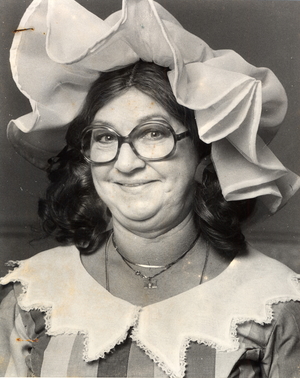
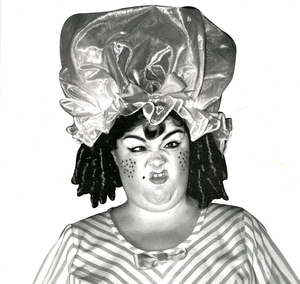
Dublin City Archives’ latest exhibition is called ‘A Christmas Spectacle: The Story of Panto in Dublin’. This colourful exhibition traces the history of the pantomime tradition in our capital city, through the stories of its theatres and its entertainers. It takes audiences down memory lane with material relating to the Theatre Royal and the Queen’s Theatre, as well as from the collections of Jimmy O’Dea, Vernon Hayden, Cecil Sheridan and Noel Purcell. There will also be lots for the younger audience with features on more recent heroes, such as Twink, Jedward and Joe Conlan.
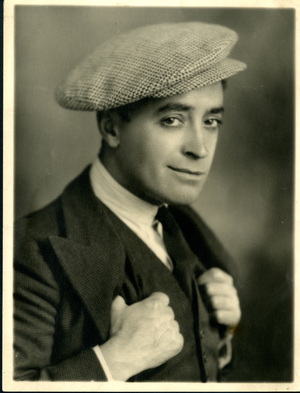
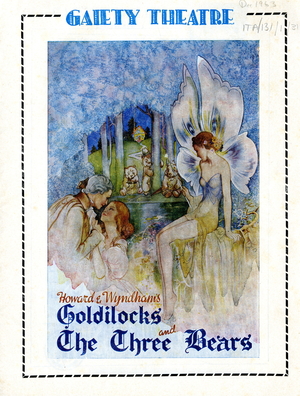
The exhibition can be found in the Dublin Room of Pearse Street Library, 138-144 Pearse Street, and will run until the end of January 2020.
Louth County Archives
Joseph Dolan Papers
The Joseph Dolan Papers was donated to Louth County Archives in 2004. A mixed collection, it consists primarily of personal correspondence received by Joseph Dolan (1872 – 1930) dating largely from 1901 – 1933. The correspondence relates to the many activities that he was involved in.
Joseph Dolan was a businessman and a scholar of ancient classics and Celtic studies. Upon his father’s death in 1902, he took over the running of the family grocery and hardware business in Ardee. He held a keen interest in antiquities, his local community, industry and enterprise, as well as local and national politics, serving for a time on the Ardee Town Commissioners and Louth County Council. He was known to have been a philanthropist helping many charitable causes and local enterprises in addition to being a member of many local societies and organizations.
Dolan was the first president of the County Louth Archaeological Society in 1904-05 and later was editor from 1915-30. He was also an Irish language enthusiast and long supported the teaching of Irish in schools. He assisted Patrick Pearse in establishing St Enda’s school. Dolan was a supporter of the Gaelic League where he took an active part in local branches and he was friendly with Douglas Hyde, the President of the Gaelic League.
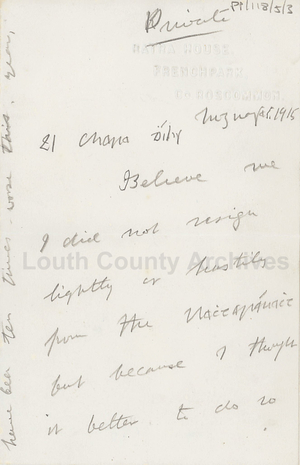
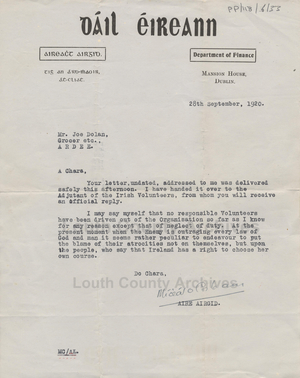
Joseph Dolan was a prolific writer who contributed articles on various topics to newspapers and he often wrote to public figures in national politics conveying his point of view regarding Irish nationalism and independence. The collection contains reply letters from several of these figures.
The catalogue to the collection is available here
ESB Archives
‘Kitchen Power – Women’s Experiences of Rural Electrification’
An exhibition “Kitchen Power’ examining the effect of rural electrification on women in Ireland in the 1950s and 1960s was launched by former President of Ireland Mary Robinson at the National Museum of Ireland – Country Life, in Turlough Park, Castlebar, Co Mayo on Friday 19th July.
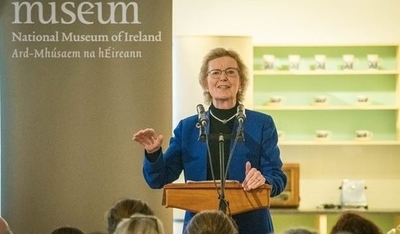
The first phase of Electricity Supply Board’s (ESB) rural electrification programme began in 1946 and ran until 1965 with a post-development phase running into the 1970s. Although many rural women worked in offices and shops, as well as on the farm, the marriage bar and prevailing cultural attitudes meant that many women’s experiences of rural electrification were at home, where the kitchen was the focus of domestic work. The free exhibition, now open until July 2020, features extensive material from ESB Archives, including photographs, advertising, public relations pamphlets, films and household artefacts. Curated by Dr. Sorcha O’Brien of Kingston University, Senior Lecturer in Design History and Noel Campbell of National Museum of Ireland, it also includes 60 fascinating oral histories from women who worked in the home through rural electrification and ESB demonstrators.
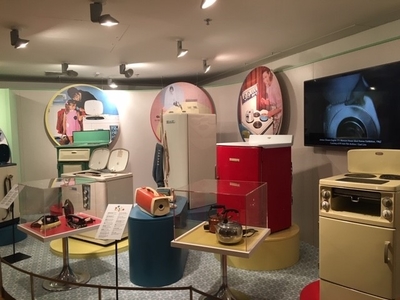
The exhibition explores how domestic electrical products were advertised and promoted as part of a modern lifestyle – moving from the traditional hearth to the fitted kitchen without challenging established gender roles.
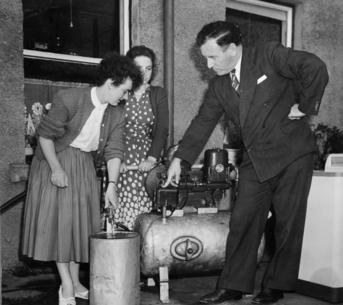
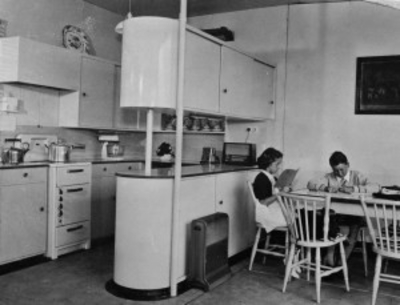
Along with artefacts and the oral history recordings – many from members of the Irish Countrywomen’s Association – ‘Kitchen Power’ also includes an ‘Electric Irish Homes textile art project’ commissioned by Age & Opportunity as part of the Bealtaine Festival, who engaged Sligo artist Anna Spearman to work with local women in Mayo to respond creatively to the Exhibition.
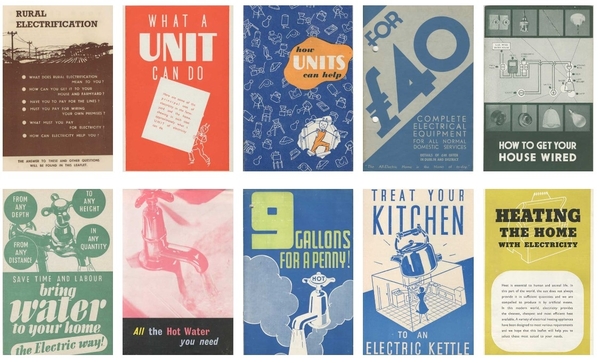
It also features a reconstruction of a 1950s ESB/ICA model kitchen which was constructed in the Museum galleries by Phillip Carey, a final year BSc (Hons) Furniture Design and Manufacture student at Galway-Mayo Institute of Technology, Letterfrack campus.
Speaking at the launch, Director of the National Museum of Ireland, Lynn Scarff said; “We are delighted to have partnered with Kingston University, the Arts & Humanities Research Council (AHRC), and the ESB in the development of this Exhibition, and we’re grateful to everyone who has contributed to it. A special thank you must go to the women who shared their stories, the exhibition is all the richer for their fascinating first-hand accounts of how electrification impacted on their lives.” ESB’s Deputy Chief Executive, Jerry O’Sullivan said; “This exhibition provides a fascinating insight not only into the transformative effect of rural electrification on the lives of women, but also the pioneering role that women played in driving the early adoption of electricity – from the ESB-employed demonstrators whose job it was to educate people on the use of new electrical appliances to women in partnership with organisations such as the Irish Country Women’s Association (ICA), the IFA and Muintir na Tíre, who saw the potential of electricity and championed it within their communities. As we look to a future where clean electricity will play a vital role in addressing climate change, we need to harness the same creativity and leadership within communities to demonstrate the benefits of electric transport and heating, and in doing so create a brighter future for all.”
Tipperary Studies
Captain William D.A. Kemmis film collection
The Kemmis collection is a small collection of film reels ranging from the mid to late 1930’s. The reels, stored in an old suitcase came from Moyaliffe House, which was home to the Armstrong family from the seventeenth century to its sale in 1999. Winona (Jess) Armstrong inherited Moyaliffe following the death of her only brother, William in France in 1917. Jess married Captain William Kemmis of Ballinacor, Co. Wexford in 1927..
The suitcase was given to a local family some years ago and brought in to Tipperary Studies in 2018. While the films could not be viewed locally, a brief index on some of the boxes suggested the contents might be of social and cultural interest.
The 16mm film was converted to digital format by the DVD Centre, Dublin and with the kind permission of family descendants relevant material was placed online in our digital archive.
The archive is accessible here and contains some footage of farming in Tipperary, horseracing and the coronation.
RTÉ Archives
Between the years 1952 and 1953, the English artist Nevill Johnson, supported by a small Arts Council grant
and using a second hand Leica camera, shot a series of photographs depicting the people and places of the
‘real’ Dublin of that time. As an outsider looking in, he captured a valuable social record of the city before it
changed irrevocably. 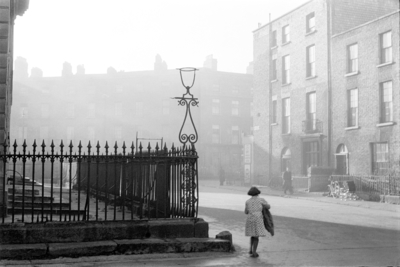 A child walks around the iron railings surrounding St George’s Church of Ireland on George’s Place, Dublin city, 1952 or 1953.
Published in 1981 by Academy Press Nevill Johnson’s book ‘Dublin : The People’s City’, a collection of these
photographs, won an award at the Leipzig International Book Art Fair. RTÉ purchased the full collection of over 1,500 negatives from Nevill Johnson in 1979. Since then RTÉ Archives
has digitised the collection on two occasions, firstly in the mid 1990s, and again in the mid 2000s. The images
were originally scanned as 18 MB JPEG files using the once cutting edge, but now defunct Photo-CD
technology. 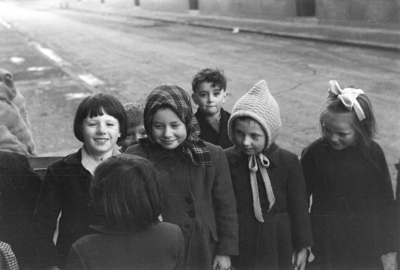 Children on Allingham Street in The Coombe area of Dublin city, 1952 or 1953.
RTÉ Archives is currently rescanning the Johnson Collection with the assistance of Grants Advanced PhotoLab
and Digital Bureau. This time the resulting scans are 300MB TIFF files. Whereas previous digitisation attempts
saw the collection reproduced with a certain gloom and dullness, great care is being taken to select an
appropriate tonal range for each frame. 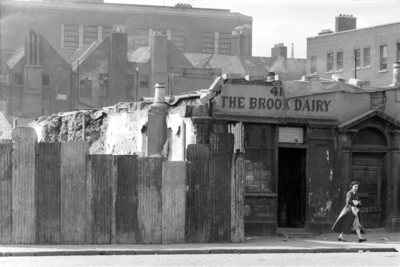 The Brook Dairy at 41 North Cumberland Street in Dublin city, 1952 or 1953.
To date approximately one third of the collection has been rescanned and the results show a collection
completely enlivened by the digitisation process. This is most apparent in the faces of the Dubliners captured
on film over 60 years ago. 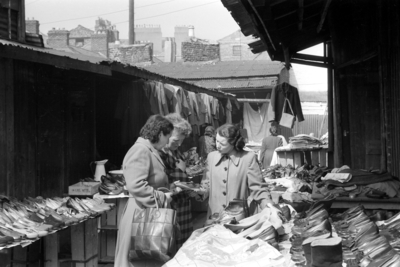 Women shoppers examine shoes for sale at Anglesea Market in Dublin city, 1952 or 1953.
The Johnson Collection can be viewed online as JPEG images, and we expect the entire rescanned collection to
be fully available by the end of 2019. all images (c) RTÉ Archives in all uses, including social media.
Loreto Archives
“To be Taught Everything Necessary”
Discover 19th Century Childhood through Loreto Boarding Schools
‘To be taught everything necessary …..’; these were the instructions of the parents of Ellen Hart, 28 Watling Street, Dublin, when she enrolled as a boarding pupil in Loreto convent Navan in 1838.
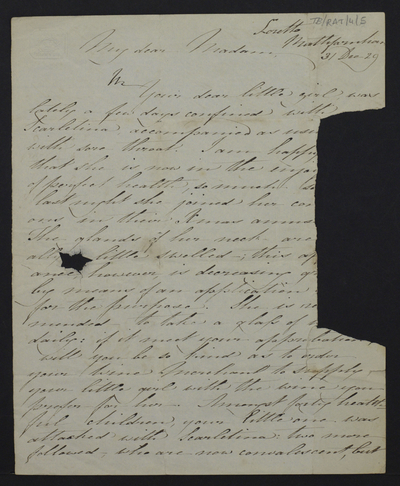
What curriculum included ‘everything necessary’? What was Ellen’s experience of boarding school in 1838? Explore the world of 19th century childhood through a unique collection of boarding school records and memorabilia, held in IBVM (Loreto), Institute & Irish Province Archives. Discover a world of childhood illnesses and remedies exemplified in the letter of M. Frances Teresa Ball IBVM to Mrs Irwin, Rathmile House, Tulsk, Co. Roscommon, on New Year’s Eve 1829, describing her daughter Margaret’s recovery from scarlet fever. Look out for the prescription for wine!
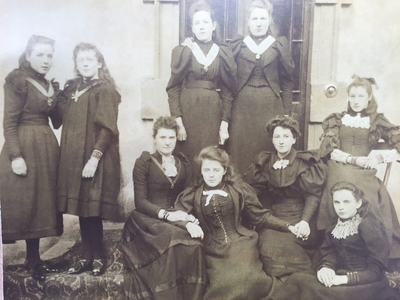
Explore school dress codes in an age before school uniforms, captured in the Loreto Kilkenny class photograph of 1897; lace collars and cuffs proudly on display vie with prominent ‘Children of Mary’ medals for those in senior classes with unblemished records!
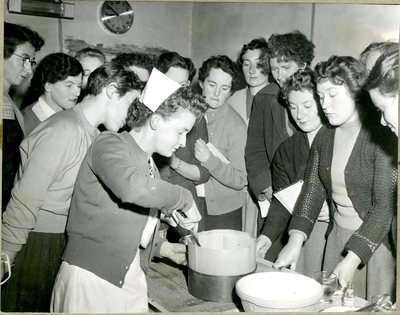
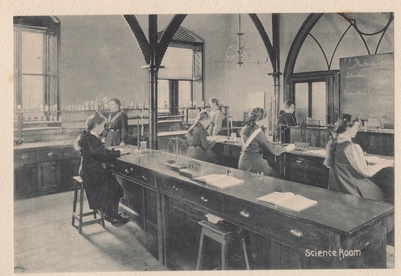
Uncover the transition from standard classrooms to laboratories and kitchens as students began to study science and home economics, conduct experiments, study catering and dressmaking skills.
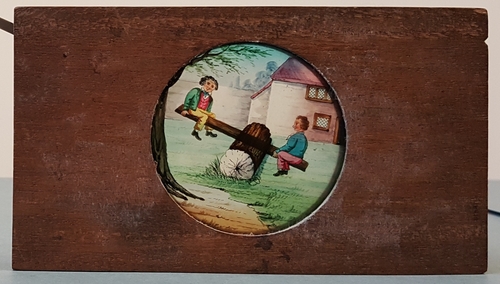
Rediscover 19th entertainments through hand painted lantern slides with moving parts, providing entertainment in a world before radio, television or Wi Fi.
View the world through the eyes of a young woman captured in her diary, jottings and autograph books such as this from Loreto Wexford.
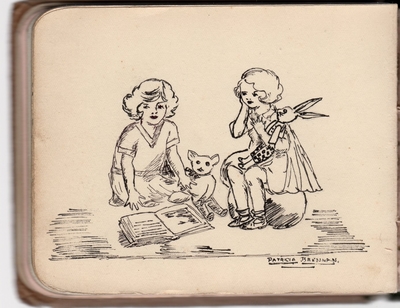
Discover our archival collections at IBVM (Loreto) Archives, 55 St Stephen’s Green, Dublin 2 or our online catalogues through the Irish Archives Resource (search for ‘Loreto’ on the www.iar.ie website).
*All images IBVM (Loreto) Institute & Irish Province Archives